Below the Black Mat: What the Younger Dryas Boundary Actually Holds
A thin dark layer in the ground marks the moment, 12,900 years ago, when a world of giants vanished from North America. What made it is a mystery science still argues about — and the honest answer turns out to be stranger than the myths built on top of it.
The soil darkens.
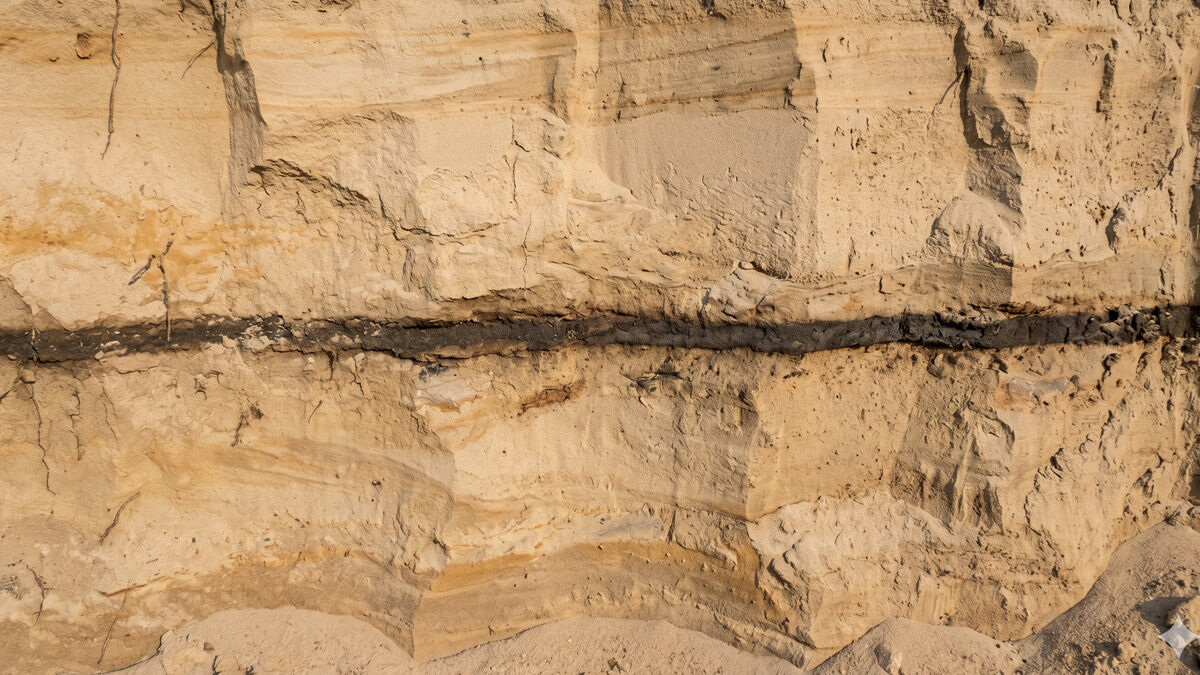
A trowel has been scraping through pale, dry sediment for hours — the packed dust of late Ice Age North America, laid down grain by grain over thousands of years. Then, a few inches down, the color changes. Darker. Greasier. Almost black. Different enough from everything above and below it that the archaeologist stops working and sets the trowel aside.
Below that dark line, the ground is full of life. Clovis spear points, knapped by some of the first people to walk the continent. Mammoth bones. Mastodon remains. Horses, camels, giant ground sloths — a North America still ruled by giants. Above the line: none of it. The spear points stop. The big animals disappear from the record and never come back. Whatever that thin dark band is, an entire world ends at it.
The band has a name. Geologists call it a black mat, and it turns up at dozens of sites across North America and well beyond — always at the same moment in time. Roughly 12,900 years ago, the planet had been warming its way out of the last Ice Age when it suddenly lurched back into deep cold for another twelve centuries. That cold snap is not in dispute. Ice cores, seabed mud, and ancient pollen all record the same chill arriving at the same time. What no one can agree on is what drew the dark line itself — and what really happened in those few centimeters of darkness where one world stops and another begins.
What came out of that darkness is strange enough on its own. What people have since built on top of it is another story entirely.
What the Layer Holds
The first strange thing was the platinum.
To see why that is strange, rewind to when the Earth was forming. For its first stretch of existence, the young planet was a churning ball of molten rock, and as it slowly settled, the heaviest elements — platinum, iridium, gold — sank toward the center, the way fine grit sinks to the bottom of a stirred glass left to stand. They went down with the iron and stayed locked in the core. That is why platinum is so rare at the surface, and so valuable: most of the planet's supply sits thousands of miles beneath your feet. So when a thin band of ordinary dirt turns out to be loaded with the stuff, it did not well up from below. Something delivered it from outside.
At the Younger Dryas boundary, the platinum is elevated — and not at one unlucky site. It shows up at dozens of them, across North America, Europe, and the Middle East. It even appears high in the Greenland ice sheet, in the GISP2 core, which holds an unbroken record of the ancient atmosphere going back tens of thousands of years. In every case, it sits in the same thin slice of time: the same 12,900-year line marked by the black mat.
Then there were the microspherules. Picture rock and soil heated so violently they do not just melt — they vaporize, then freeze back into tiny glassy beads as they fall, the way droplets of water can freeze into hail on the way down. That is roughly the kind of furnace it takes to make them. The microspherules in this layer are the fingerprints of extreme, sudden heat, far beyond anything an ordinary wildfire can produce. They turn up at multiple sites. They turn up in the same layer as the platinum.
Plenty of researchers had noticed one marker or another over the years. R.B. Firestone, a nuclear chemist at Lawrence Berkeley National Laboratory, was the first to lay them all on the same table — platinum, microspherules, soot, melted glass — across dozens of sites on more than one continent, and ask a simple, uncomfortable question. Could all of these really have landed in the same thin layer, at the same instant, by accident? His 2007 paper in the Proceedings of the National Academy of Sciences did not claim to have the answer. It put the question on the record, formally, for the first time. The pattern was too consistent, at too many sites, at too precise a moment, to simply brush aside.
What the pattern meant was exactly where the agreement ended.
The Glass
Of all the strange things in that dark layer, the glass is the hardest to wave away.
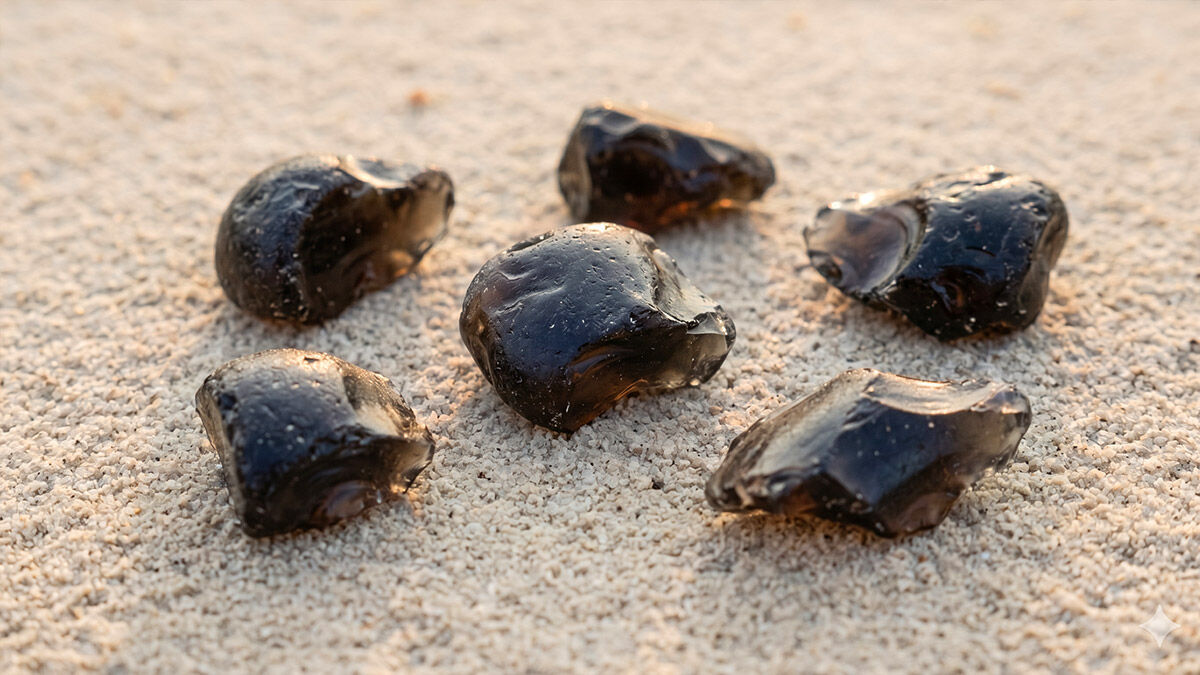
Andrew Moore was not looking for a catastrophe. He was looking for the birth of farming. A British archaeologist who would later serve as President of the Archaeological Institute of America, Moore came in the 1970s to a site called Abu Hureyra, in what is now northern Syria — a settlement where people had lived from about 13,000 years ago into the early days of agriculture, right at the hinge where humans first traded hunting and gathering for planted fields. What his dig turned up in the boundary layer was not on his list. It was glass.
The glass had formed at temperatures between roughly 1,700 and 2,200 degrees Celsius. That number is easy to skim past, so it is worth slowing down on. A good wood fire tops out around 900 degrees. A pottery kiln, built specifically to get hot, reaches about 1,200. The Abu Hureyra glass needed nearly twice that — hotter than a blacksmith's forge, hotter than flowing lava. Lightning can fuse sand into glassy tubes, but it leaves a different signature than this. The glass here is bone-dry, chemically scarred in the way that only a violent heat shock leaves behind, and salted with the same platinum-group elements found elsewhere in the layer. Nothing a Neolithic village could build — no hearth, no kiln, no cooking fire — comes anywhere close to making it.
There is a small, sad footnote to the site. Abu Hureyra is gone now, drowned under the Assad Reservoir when the Tabqa Dam went up across the Euphrates in the 1970s. Moore's team pulled out what they could before the water rose. The glass made it out of the ground and into the scientific record just ahead of the flood that buried the village for good.
The glass is real. What made it is the part that will not sit still.
Where It Softens
For a while, the case looked solid. The platinum was found again and again. The glass at Abu Hureyra was real. The microspherules showed up at site after site. The floor of the evidence felt like it would hold.
Then the cracks started to show.
Start with the nanodiamonds — microscopic specks of diamond that form only under ferocious pressure and heat, and that were once hailed as the single best fingerprint of a cosmic impact at this boundary. The trouble is that other scientists could not find them. Team after team went back to the same sites, ran the same material, and came up empty. Some of what had been called nanodiamond turned out, on closer inspection, to be ordinary forms of carbon. Some supposed impact debris turned out to be fossilized insect droppings. The flashiest piece of evidence in the whole case became the hardest to reproduce — and in science, a result no one else can repeat is a result on thin ice.
And the nanodiamonds were only the start. A study in the Proceedings of the National Academy of Sciences went looking in dark, organic "black mat" layers of many different ages — not just the famous one — and found elevated iridium, magnetic grains, and even some spherules scattered among them. If the same markers show up in ordinary layers from other times, formed by nothing more dramatic than a wet meadow slowly rotting, then they cannot be proof of a single fiery event at one specific moment.
Then there is the timing, which never quite lines up. The great animals really did vanish, and the Clovis hunters really did fade from the record — but not in a single afternoon, the way a global catastrophe would demand. The horses, camels, mammoths, and mastodons drop out of the fossil record raggedly, some here, some there, spread across centuries and in places thousands of years. A meteor strike kills everything at once. What the ground actually shows is something slower and messier than that.
Vance Holliday, an archaeologist at the University of Arizona who has spent decades reading the sediment of late Ice Age sites across the continent, walked the same evidence as the impact's champions and came away unconvinced. Not because the markers were imaginary — but because he kept finding versions of them in layers that had nothing to do with 12,900 years ago. His 2023 review, written with a team of geologists, archaeologists, and geochemists, is the most thorough takedown the idea has faced. Its verdict is careful and worth hearing exactly: the markers are not made up. They are simply not unique enough to prove what they were said to prove.
There is even a way to explain the Younger Dryas cold snap with no space rock at all. As the great ice sheets melted, they pooled their meltwater into an enormous lake — Lake Agassiz, sprawled across what is now central Canada, larger than all the Great Lakes combined. If a wall of ice holding it back gave way, that lake could have dumped into the North Atlantic all at once. Think of it as throwing a cold-water brake on the ocean. The Atlantic runs a vast conveyor belt of currents — warm water flowing north near the surface, cold water sliding back south in the deep — and that conveyor stalls when a sudden flood of cold freshwater swamps its northern end. Stall it, and the whole Northern Hemisphere plunges into cold. The flood evidence exists. The climate models agree it would work. No impact required.
The Ceiling
And there is one more problem, the largest of all. There is no crater.
For an event big enough to end an age, nobody has found the hole it should have punched in the planet. The hypothesis has an answer for this: it proposes not a single rock but a comet breaking apart and detonating in midair, as an airburst, over the two-mile-thick ice sheet that then covered northern North America. An explosion above the ice, the argument goes, would leave little permanent scar. That is physically reasonable. It is also the one place where the missing evidence is explained away rather than actually found — and that is a meaningful difference.
That is where the trail goes cold, because absence is the one thing you can never fully confirm.
None of this means the idea is dead. The most recent supportive paper, from 2024, reported fresh platinum spikes and high-temperature melt at three sites in the eastern United States — proof that serious researchers still find data here worth chasing. But finding data is not the same as settling the question. Most specialists in the relevant fields currently regard the impact hypothesis as unproven; a determined minority keep publishing in its favor. The honest status is not "debunked" and not "confirmed." It is genuinely, frustratingly open.
That is the scientific ceiling — the point past which the evidence simply cannot yet carry anyone.
The cultural ceiling is somewhere else entirely.
The Younger Dryas impact has been embraced, far beyond the laboratory, by writers and filmmakers who see in it the trigger for something much grander: a lost golden age, an advanced Ice Age civilization wiped from the Earth, its few survivors scattering to seed the flood legends and to found Egypt, Mesopotamia, and the Americas. Atlantis, in other words, with a comet for a villain. Göbekli Tepe recast as an encoded warning carved in stone. It is a thrilling story. It is also not what the dirt says. The dark layer holds platinum, glass, soot, and an unsettled argument about heat. It does not hold a vanished empire. It never did.
Below the Black Mat
Go back to the trowel, and the dark line, and the two different worlds pressed against either side of a few centimeters of dirt.
Everything genuinely strange about that boundary is still there. The platinum is still there. The glass that should not exist is still there. The microspherules, scattered across continents, are still there. Something happened 12,900 years ago — something that branded itself into the soil and the ice and the Syrian glass that escaped the flood. What that something was is the part the evidence will not yet close, and the part the experts have not yet agreed on. And that is not a failure of science. It is what honesty looks like when the record is hard to read.
It has happened before. The most famous boundary line in all of geology is the thin band of iridium that marks the death of the dinosaurs, 66 million years ago. When Luis Alvarez and his son Walter proposed in 1980 that the metal in that layer had been delivered by a giant asteroid, the idea was mocked for years. The mechanism sounded outlandish. The crater was nowhere to be found. Then the evidence kept accumulating, other labs kept confirming it, and a decade later the crater itself turned up, buried under the Yucatán. The strange line in the rock turned out to be telling the truth all along — it just took the world a while to learn how to read it.
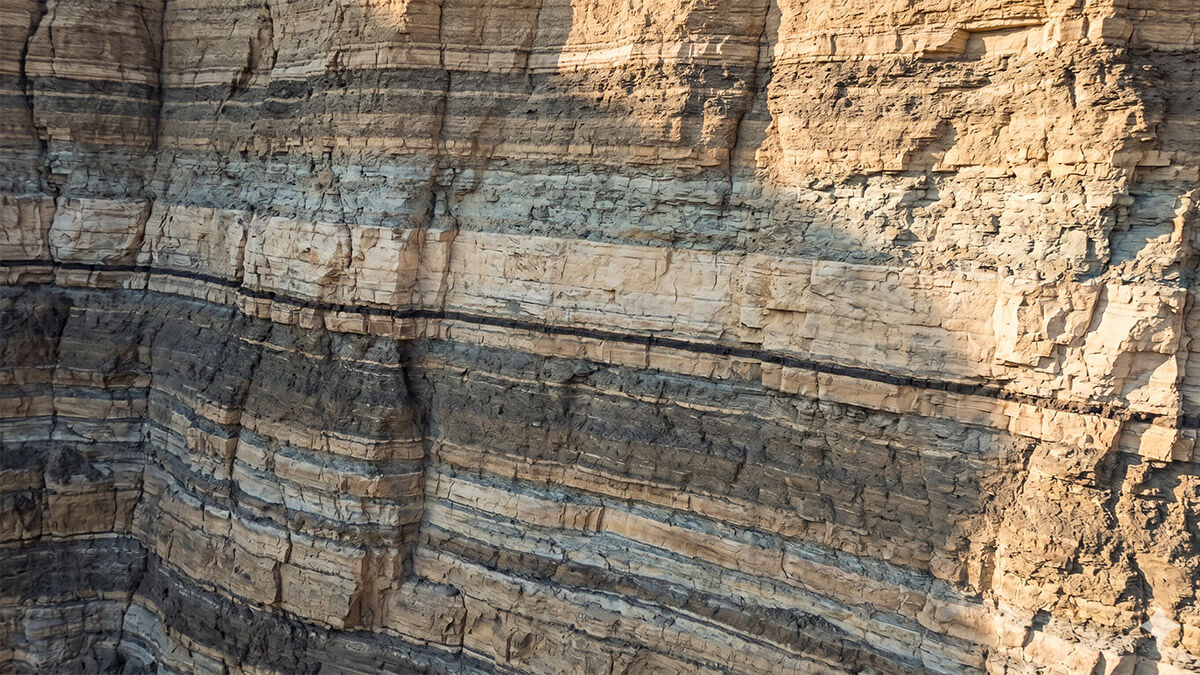
The Younger Dryas line has some of the same ingredients. The markers are spread across continents. The anomalies at specific sites are real. But the replication has wobbled, and the crater has never been found. Whether the evidence eventually converges the way the dinosaur layer did, or quietly comes apart, is a question that belongs to the next generation of careful digging — not to anyone in a hurry to be right.
And there is a quieter takeaway underfoot, one that outlasts the whole debate. The ground keeps records. Every layer of soil is a page, and the planet has been writing in it far longer than anyone has known how to read. A dark stripe a few centimeters thick can hold platinum from beyond the Earth, glass forged at impossible heat, and the silence where a continent's giants used to be. The honest thrill of a place like the black mat is not the lost civilization someone painted on top of it. It is the layer itself — still strange, still unsolved, still patiently waiting for whoever finally learns to read it down to the bottom.