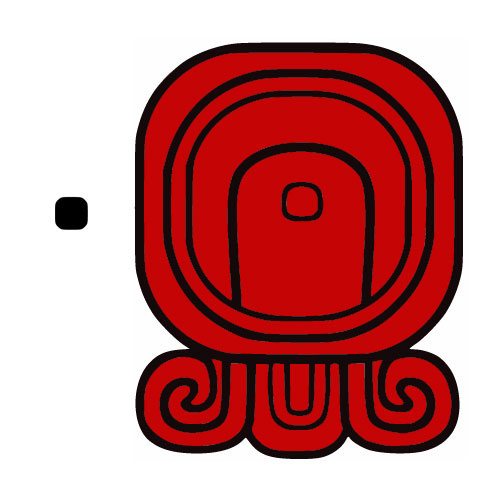
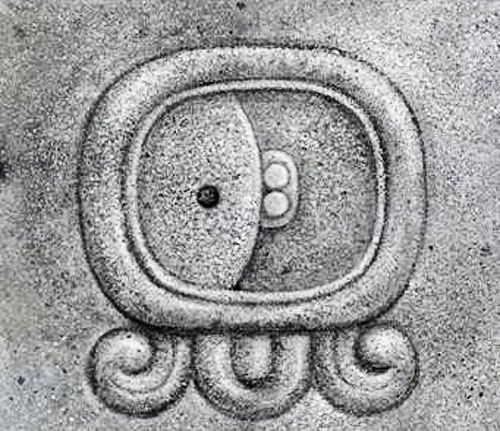
The sign of water and purification. Ceremonially the Maya use water as an offering to bring collective strenth, adaptability and harmony…Click hereto read full description.
The Trecena of Toj (2nd – 14th December 2025) by Mark Elmy
The trecena of Toj is a time to make our payments, to balance out and give back for all that we have taken, a time to resolve our debts.
This Trecena starts with 1 Muluc – Water/Offering – Emotional, Imaginative, Intuitive, Vessel of Gratitude, Essence of Life, Offering Gratitude for Water and Life…Click here to read full article.
Jaguar Wisdom 1 – Toj (Muluc)
by Kenneth Johnson
1 – Toj (Muluc) – Today the new trecena begins. The word toj literally means “payment” or “an offering,” with the understanding that we are making payment and offerings to the spiritual world. Thus this 13-day cycle can be a time when we do important spiritual work aimed at bringing our relationship with the spiritual world into new harmony, correcting any sense of imbalance or unease which we may have with the cosmos that lies within us. Toj is also the day which symbolizes the “sacred fire” which lies at the heart of Mayan ceremonial life. Many of us, who live in cities, will not have the opportunity to light such fires, but a few candles on the altar will certainly be helpful…Click here to read full article
The Tzolk’in Clock Water Trecena
by White Shaman
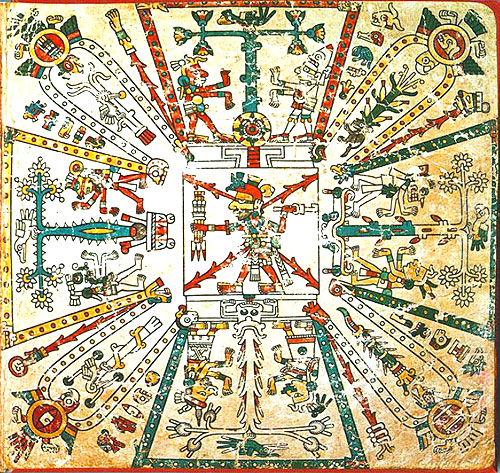
The Tzolk’in calendar connects us humans using time, mind, body, and spirit. It’s also meant to be viewed in more than just two dimensions. As a 3D representation of the Tzolk’in, consider you are in the center of an eight-wall room (like a hoogan) and you are facing east out the door, towards the sunrise. When viewed in 3D, the south face of the Tzolk’in is to your right, and the water trecena flows along the top of the right wall… Click hereto read full article.
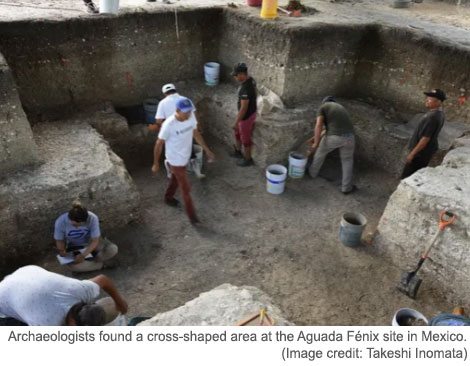
Massive 3,000-Year-Old Maya Site Depicts The Cosmos And The ‘Order Of The Universe by Owen Jarus
A 3,000-year-old Maya site is actually a giant, city-size map depicting the “order of the universe,” researchers say. The ruin, in what is now southeastern Mexico, was a cosmogram — a representation of how ancient people at the site viewed the cosmos, a new study suggests.
The site, known as Aguada Fénix, is the “oldest and largest monumental architecture in the Maya area” and is larger than many ancient cities in Mesoamerica, the researchers wrote in the study. Although its construction was a major endeavor, its cultural significance, likely motivated people to help construct it, meaning its builders were probably not coerced into labor, the researchers suggested.
In effect, building Aguada Fénix may have been a celebrated communal activity for ancient people, just like Stonehenge likely was in prehistoric…Click here to read article.